

Last Updated: November 12, 2026
Quick Summary
To clean boat deck furniture without damaging it, first identify each surface, then rinse with fresh water and apply a pH-neutral cleaner, letting it sit about 10 minutes before scrubbing with a soft-bristle brush. Rinse until the water runs clear and dry with a microfiber cloth.
- Rinse loose salt, sand, and grit with fresh water before scrubbing any surface.
- Let pH-neutral cleaner dwell about 10 minutes before scrubbing.
- Scrub non-skid following the texture pattern, not in circles.
- Never use bleach, ammonia, or abrasive cleaners on marine vinyl.
- Apply marine-grade UV protectant every 4-6 weeks during the season.
Table of Contents
- Start With the Material, Not the Cleaner
- Tools and Products to Have On Board
- Step-by-Step: How to Clean Boat Deck Furniture
- How to Clean Boat Seats and Vinyl Upholstery
- How to Clean Mildew Off Boat Cushions
- Choosing the Best Boat Deck Cleaner for Each Surface
- Boat Furniture Maintenance Between Deep Cleans
- Shop Foldable Deck Seating That Stays Clean Easier
- Frequently Asked Questions
Start With the Material, Not the Cleaner
The biggest mistake boat owners make when cleaning boat deck furniture is grabbing the strongest cleaner on the shelf and scrubbing away. That approach can dull gelcoat, strip vinyl, and leave permanent marks.
Material comes first. Always. A cleaner that's safe for fiberglass can ruin vinyl upholstery. A brush that lifts grit from non-skid can scratch teak. The boat deck cleaning guidance from Get Undrdog makes this point plainly: identify the surface, then match the cleaner and tools to it.
So before you touch a bottle, know what you're cleaning:
- Fiberglass and gelcoat: tough, but sensitive to abrasives
- Non-skid decks: textured, trap grit, need soft bristles
- Vinyl upholstery: flexible, prone to mildew and UV damage
- Teak: wood, needs pH-neutral care and re-oiling
- Marine-grade poly and plastic: durable, but can chalk and stain
Get this step right and everything else gets easier. Get it wrong and you're cleaning up a bigger mess than the one you started with.
Tools and Products to Have On Board
You don't need a locker full of chemicals. A small, well-chosen kit handles almost every job on deck. Here's what we recommend keeping aboard:
- Soft-bristle deck brush for non-skid and vinyl
- pH-neutral marine cleaner for everyday grime
- Mild detergent for light soil and vinyl
- Fresh water hose for rinsing
- Microfiber cloths for drying and buffing
- Soft sponge for delicate surfaces
- Biodegradable cleaner for water-safe runoff
- Bucket for mixing and rinsing
Two things to skip: abrasive pads and stiff wire brushes. A boat-seat cleaning source from We Can Fix That warns that scrubbing vinyl with a brush can degrade the material or leave visible marks. Soft bristles do the job without the damage.
Step-by-Step: How to Clean Boat Deck Furniture
Here's a general process for cleaning deck furniture.
Step 1: Rinse With Fresh Water First
Rinse the whole area with fresh water before you scrub. This lifts loose salt, sand, and grit that would otherwise scratch the surface. Pay attention to crevices and seams where salt buildup hides.
Step 2: Apply a pH-Neutral Cleaner and Let It Sit
Apply your pH-neutral cleaner and give it time to work. The 2026 outdoor furniture cleaning guide from The Outdoor Living Store suggests letting cleaner sit for about 10 minutes before scrubbing. That dwell time does more than extra elbow grease.
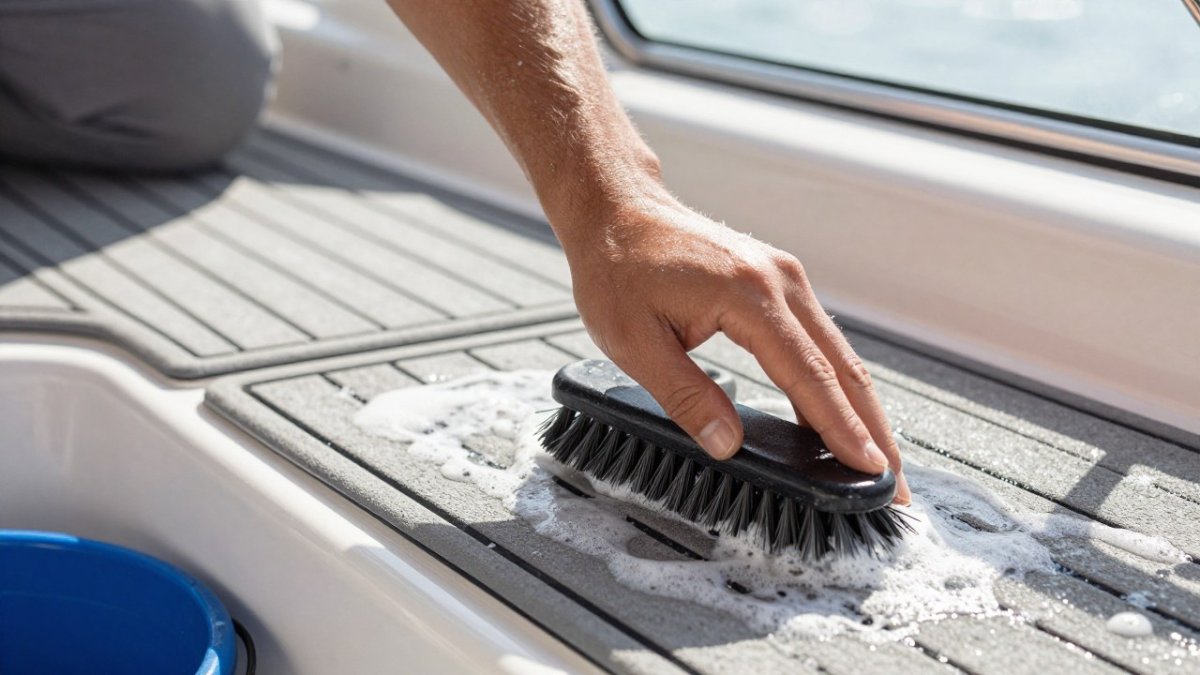
Step 3: Scrub Non-Skid and Textured Surfaces
Use a soft-bristle deck brush and work in small sections. Follow the texture of the non-skid rather than scrubbing in circles. This lifts dirt from the pattern without flattening it.
Step 4: Rinse Thoroughly and Dry
Rinse until the water runs clear. Any leftover residue attracts new dirt and can leave a film. Dry with a microfiber cloth to prevent water spots and mildew.
| Step | Time | Key Tool |
|---|---|---|
| Rinse | 5 min | Fresh water hose |
| Apply cleaner | 10 min dwell | pH-neutral cleaner |
| Scrub | 10 min | Soft-bristle brush |
| Rinse and dry | 5 min | Microfiber cloth |
Time
How to Clean Boat Seats and Vinyl Upholstery
Vinyl upholstery on a boat is not a single material. Marine vinyl varies in thickness, backing, and UV inhibitors, and the stitching and thread used can be more vulnerable than the vinyl itself.
Identify your vinyl type first. Marine vinyl falls into two broad categories: expanded vinyl (foam-backed, common in older boats) and supported vinyl (fabric-backed, more durable). Expanded vinyl is more prone to cracking and requires gentler cleaners. Check the underside of a cushion or a hidden seam to see the backing.
The cleaning sequence that protects the finish:
- Rinse with fresh water to remove loose salt and grit. Salt crystals act like sandpaper if you scrub them into the vinyl.
- Apply a pH-neutral marine vinyl cleaner with a soft sponge or microfiber cloth. Work in small sections, and do not let cleaner dry on the surface.
- For textured vinyl (often used on boat seats to improve grip), use a soft-bristle brush with light pressure. Follow the texture pattern, not circles, to avoid flattening the grain.
- Rinse thoroughly until water runs clear. Residue attracts dirt and can break down UV inhibitors.
- Dry completely with a microfiber cloth and let air dry before covering. Trapped moisture is the leading cause of mildew.
Watch out: Never use bleach, ammonia, or abrasive cleaners on vinyl. They strip the plasticizers that keep vinyl supple, leading to cracks within a season.
Stitching and thread care: The thread used in marine upholstery is often polyester or PTFE, but it can still be weakened by harsh chemicals.
UV protection is part of cleaning: Vinyl that is not protected will fade and crack. After cleaning and drying, apply a marine-grade UV protectant (not a general-purpose automotive product) every 4-6 weeks during the season.
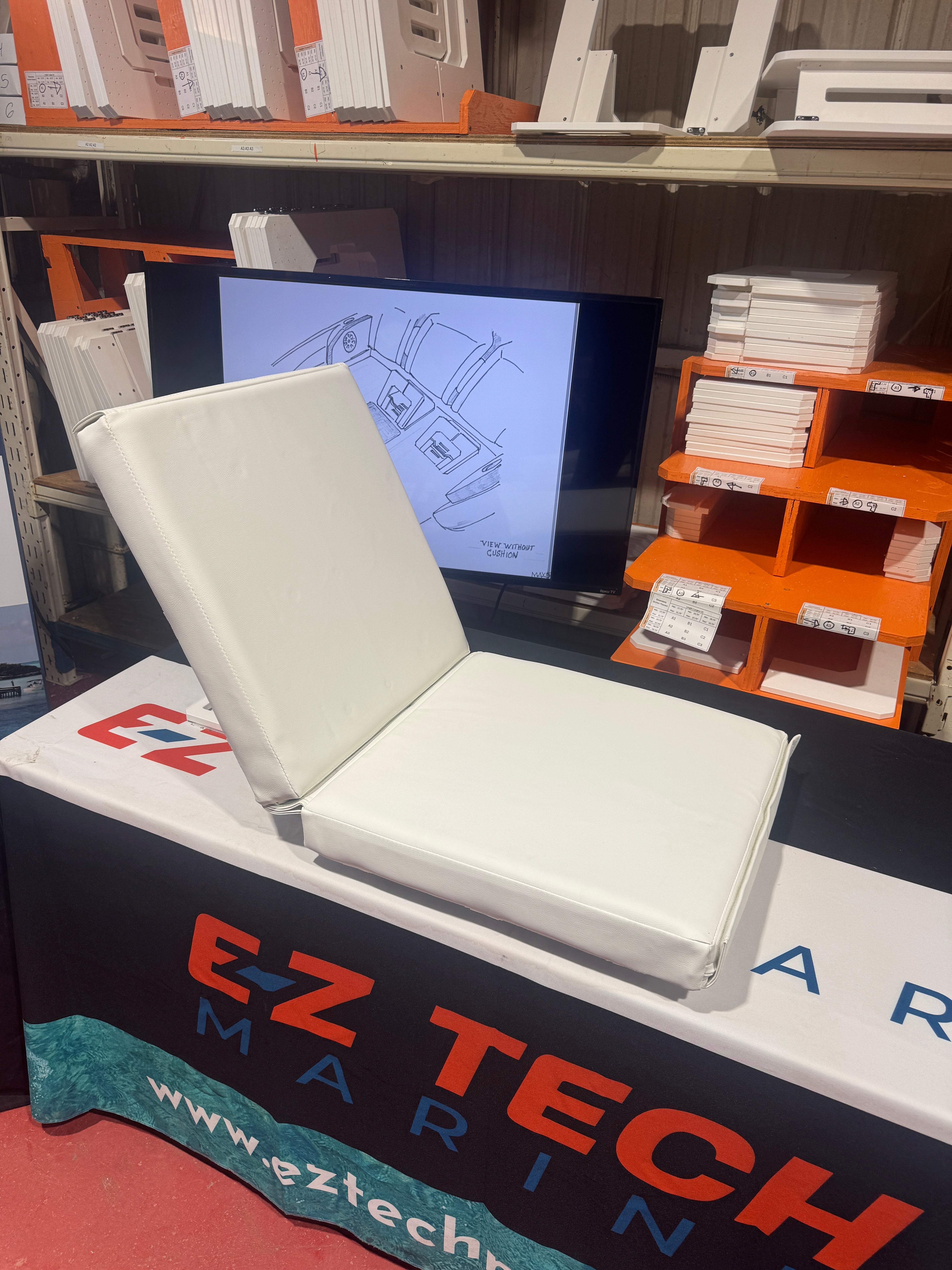
When to replace rather than clean: If vinyl feels stiff, has deep cracks, or the backing is exposed, cleaning will not restore it. For a sense of the material and finish to care for, browsing the A Serie Main Cushion White Vinyl gives you a reference point for what quality marine vinyl looks like.
How to Clean Mildew Off Boat Cushions
Mildew is the enemy of every boat cushion. It thrives in damp, shaded spots and spreads fast once it takes hold.
Here's how to handle it:
- Remove the cushion from the boat if possible
- Rinse off loose dirt with fresh water
- Apply a mildew-safe cleaner and let it sit
- Wipe with a soft cloth, not a brush
- Rinse thoroughly and dry in the sun
Watch out: never mix bleach with other cleaners, and never scrub mildew aggressively on vinyl. Both can damage the surface and leave you with a bigger problem. For cushions that are past saving, the Dinghy Rest Cushion White Vinyl is waterproof and easy to clean, which makes mildew management simpler.
Choosing the Best Boat Deck Cleaner for Each Surface
There's no single best boat deck cleaner for every job. The right pick depends on the surface, the type of soil, and where the runoff ends up.
Use this as your guide:
- Fiberglass and gelcoat: pH-neutral marine cleaner
- Non-skid: mild detergent with a soft brush
- Vinyl: dedicated vinyl cleaner, pH-neutral
- Teak: pH-neutral teak cleaner, then re-oil
- Poly and plastic: mild detergent and warm water
For boat owners who care about runoff, biodegradable options are worth the switch. They break down more safely in the water and still handle everyday grime. If you're comparing cleaners for different surfaces, browsing the C serie main cushion, White vinyl helps you understand the vinyl you're caring for.
Boat Furniture Maintenance Between Deep Cleans
Deep cleans get the attention, but the habits between them determine how long your boat furniture lasts. Most guides list generic tips like 'rinse after every trip' without explaining why or what to do when something goes wrong.
The weekly routine that prevents 80% of problems:
- Rinse after every trip with fresh water, not salt water. Salt left on vinyl or teak draws moisture from the air and accelerates mildew. A quick rinse takes two minutes and removes the salt film that attracts dirt.
- Dry before covering. Covering damp cushions traps moisture against the surface, creating a perfect environment for mildew. Leave cushions upright in the sun for 30 minutes before stowing.
- Wipe down high-touch areas (armrests, seat edges) with a damp microfiber cloth weekly. These areas accumulate sunscreen and body oils, which break down vinyl over time.
- Check seams and stitching monthly. Look for loose threads or small tears. A single loose thread can unravel a seam in a season. Trim loose threads with sharp scissors, do not pull them.
Troubleshooting common damage:
- Minor scratches on vinyl: Clean the area with mild soap and water, then apply a vinyl repair compound matched to your color. Do not use superglue or generic adhesives, they cure rigid and crack. For deeper scratches that expose the backing, a professional vinyl repair kit is the only reliable fix.
- Mildew spots that return: If mildew keeps coming back after cleaning, the spores are embedded in the foam backing or stitching. Remove the cushion, soak it in a diluted mildew remover (follow product directions), and dry it completely in direct sun for a full day. If the spot persists, the cushion may need replacement.
- Teak furniture turning gray: Graying is UV damage to the wood's surface. A light sanding with 220-grit followed by a teak oil application restores color. Do not use pressure washers on teak, they erode the soft grain.
- Polywood or plastic furniture chalking: Chalking is a sign of UV degradation. Clean with a mild detergent and apply a plastic restorer with UV inhibitors. Avoid abrasive cleaners, which accelerate chalking.
Seasonal protection:
- Vinyl: Apply UV protectant every 4-6 weeks during boating season.
- Teak: Re-oil every 3-4 months, or when water no longer beads on the surface.
- Polywood: Apply a UV-resistant sealant annually.
- Metal frames: Check for corrosion at joints and apply a corrosion inhibitor spray.
Watch out: Never store cushions in a sealed plastic bag or airtight container. Trapped moisture causes mildew even in dry climates. Use breathable storage bags or leave cushions upright in a ventilated area.
One accessory worth knowing about is the Keder Welt on Velcro or snaps, 40 inches long. It secures cushions in place and reduces the wear that comes from shifting and rubbing. Small fixes like this prevent bigger damage down the line.
Shop Foldable Deck Seating That Stays Clean Easier
The easiest furniture to clean is furniture that's designed for it. Foldable, removable seating can be lifted out of the way for cleaning and stored off the deck.
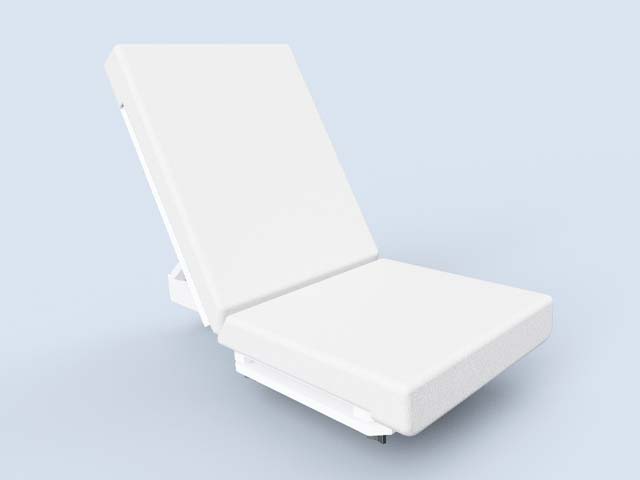
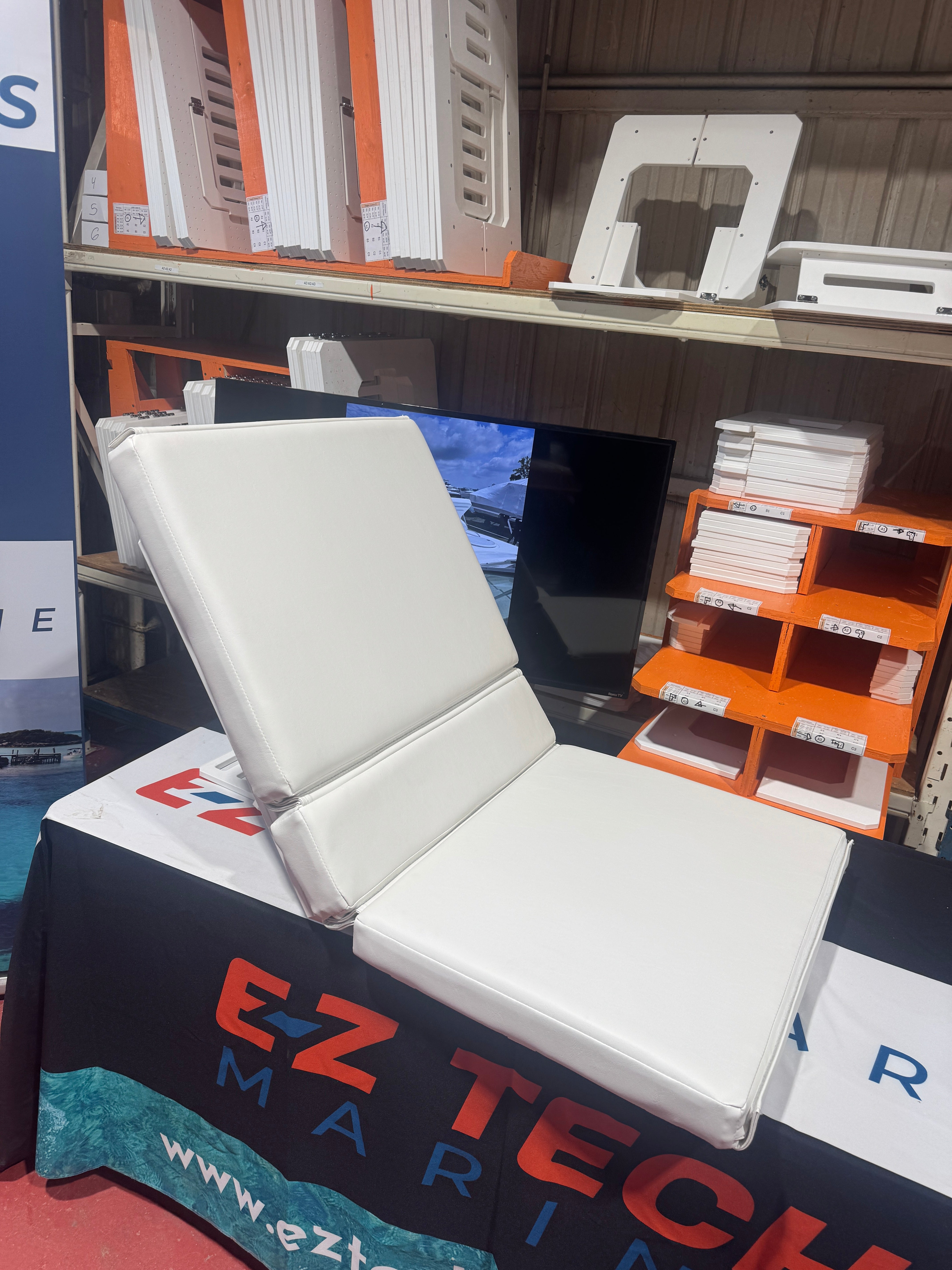
The E-Z Rest recliner installs without drilling or screws, folds down for easy storage, and has an adjustable backrest for comfort beyond a standard sunpad.
If you want deck seating that's simpler to clean and easier to live with, the E Z Rest Recliner 18 Inches To 68 Inches Wide V3 is worth a look.
Cleaning boat deck furniture doesn't have to be a chore you dread. Match your tools to the material, rinse first, let cleaners do the work, and dry thoroughly.
Frequently Asked Questions
Can I use a pressure washer on boat deck furniture?
Avoid it on upholstery and gelcoat. High pressure can force water into seams and foam, degrade vinyl, and strip sealant from teak and fiberglass. A garden hose, a soft-bristle deck brush, and a pH-neutral cleaner handle most salt buildup and grit. If you use a pressure washer on hard fiberglass only, keep it on the lowest setting and well away from cushions, caulking, and fittings.
How often should you clean boat deck furniture?
Rinse with fresh water after every trip, especially in salt water. Do a full clean with a pH-neutral cleaner every two to four weeks during the season, and a deeper clean before winter storage. Cushions and vinyl benefit from a wipe-down more often if you entertain frequently or store the boat uncovered. Regular boat furniture maintenance stops salt buildup and mildew from becoming a restoration job.
Can I use Dawn dish soap to clean boat seats and deck furniture?
A mild detergent is fine for a quick clean on many surfaces, but dish soap can leave residue and strip wax or protectant over time. For vinyl upholstery, use a pH-neutral marine cleaner and a soft cloth, never a stiff brush, since brushing can degrade the material or leave marks. For teak and gelcoat, match the cleaner to the surface and rinse thoroughly.
How do you protect boat furniture from sun and salt?
Rinse salt off after every trip, dry surfaces before covering, and apply a UV protectant to vinyl and a suitable sealant to teak and gelcoat. Cover seating when the boat sits idle, and store foldable pieces out of direct sun. These habits slow oxidation and keep surface integrity intact between deep cleans.
